


 Property Tax in Victoria BC (2026): How Much You’ll Pay + Monthly Cost Breakdown
Quick Answer:
Property tax in Victoria BC is based on assessed property value, municipal tax rates, local levies, and available services. Many Greater Victoria homeowners experience effective residential property tax costs somewhere roughly in the range of 0.3%–0.6% of assessed value before grants, depending on the municipality and property type.
In Victoria BC, property taxes are influenced by more than just your home’s assessed value. Municipal tax rates, school taxes, regional levies, utility charges, and local assessments can all affect your total annual costs.
Buying a home in Victoria BC comes with more than just the purchase price.
Many buyers search “how much is property tax in Victoria BC” or “Victoria BC property tax rates 2026” while planning their budget. This is one of those costs that quietly shapes how your home feels financially month to month.
We’re Anna Hakim and Perry Fanthorpe from the Happy Homes Team. When we guide clients, we don’t treat property tax as a side note. We treat it as part of how your home fits into your life, both now and long term.
Why Property Tax Matters More Than You Think
In the Greater Victoria real estate market, home values are higher than many other parts of Canada. That means even relatively small differences in taxes and levies can meaningfully affect monthly ownership costs.
Across the Vancouver Island housing market, we often see:
- Higher purchase prices increasing total tax paid
- Different municipalities applying different tax structures and levies
- Buyers focusing heavily on price but not long-term ownership costs
- Confusion around assessed value vs market value
👉 To understand how this connects to your overall lifestyle, review the cost of living in Victoria BC breakdown (2026 guide).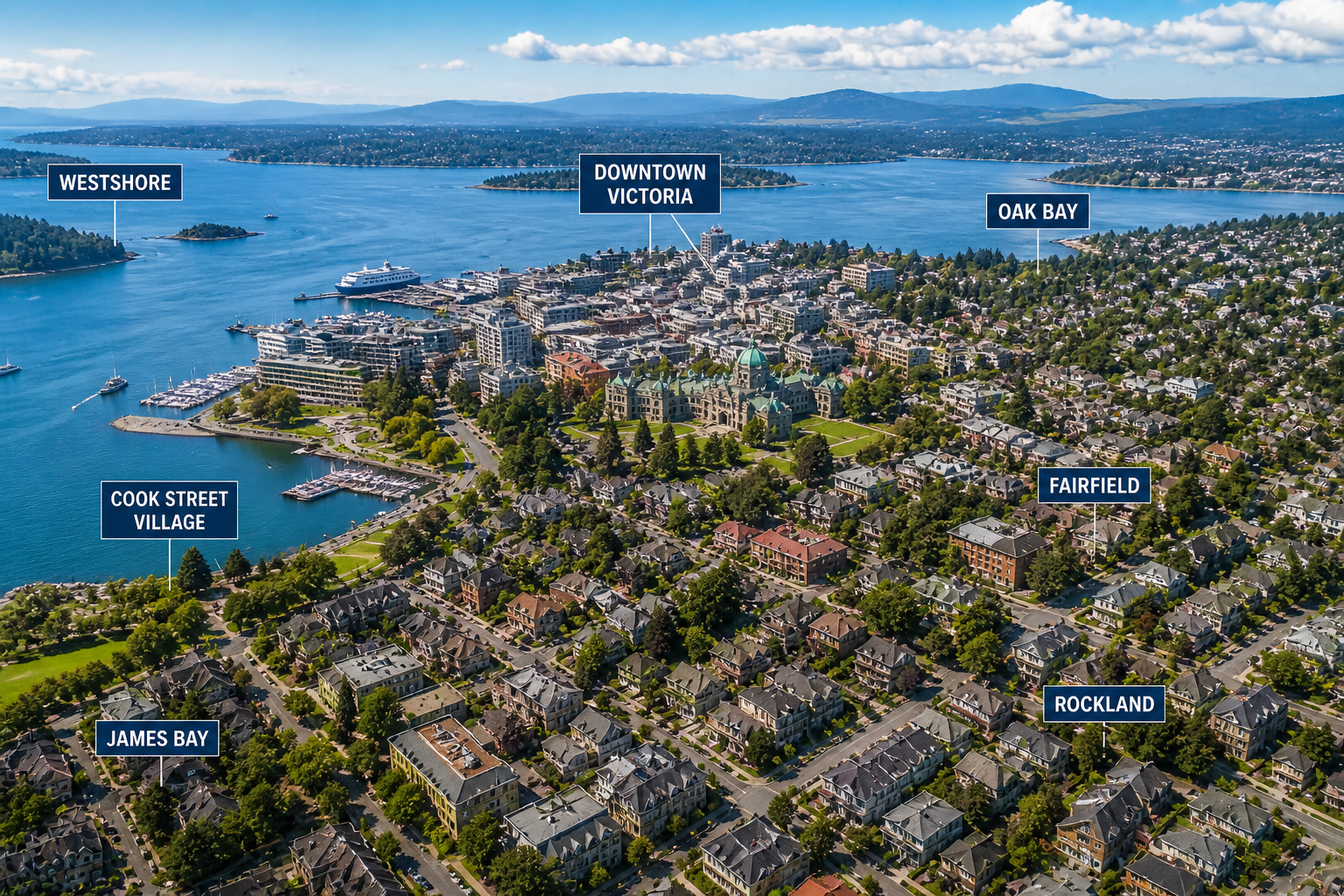 How Property Tax in Victoria BC Is Calculated
Property tax in BC is more nuanced than a simple “home value × tax rate” formula.
Taxes can be influenced by:
- Assessed value of your property
- Municipal tax rates
- School taxes
- Regional levies
- Utility and service charges
- Parcel or frontage taxes
- Property classification
Property values are assessed annually by BC Assessment, the provincial authority responsible for property valuation in British Columbia. Municipalities then apply yearly tax rates and local levies to those assessed values.
Here’s a simplified way many people estimate property taxes in Victoria BC:
Estimated Assessed Value × Local Tax Rate = Approximate Annual Property Tax
Example:
$900,000 home × 0.4% = approximately $3,600/year before grants or adjustments
This provides a broad educational estimate only. Actual tax notices may also include additional levies, service charges, and local calculations.
Assessed Value vs Market Value
One important thing many buyers do not realize is that assessed value and market value are not the same thing.
BC Assessment values are used for taxation purposes and may differ from a property’s current market value depending on:
- Market conditions
- Renovations
- Neighborhood trends
- Unique property characteristics
- Timing of the assessment date
This becomes especially noticeable during changing markets.
Property Tax Rates Across Greater Victoria (2026 Estimate)
Property tax structures and total ownership costs can vary significantly between municipalities across Greater Victoria. This is why it’s important to look at the full monthly ownership picture, not just the purchase price.
Many Greater Victoria homeowners experience effective residential property tax costs somewhere roughly in the range of 0.3%–0.6% of assessed value before grants, depending on the municipality and property type. Property tax rates and total annual taxes can change yearly and should always be verified through the municipality or current listing information.
🔍 When Do You Pay Property Tax in Victoria BC?
Property taxes notices are typically issued in May, with payment due July 2 for most Greater Victoria municipalities.
Property tax may be:
- Paid directly by the homeowner
- Collected through some mortgage lenders
- Subject to penalties if paid late
Understanding timing helps you avoid surprises and manage your cash flow more effectively.
What Property Taxes Actually Pay For
Property taxes support essential local services, including:
- Schools
- Roads and infrastructure
- Emergency services
- Parks and community spaces
- Water and sewer systems
- Libraries and local operations
These services shape your everyday experience, which is one reason different neighborhoods can feel so different.
The BC Home Owner Grant
Many owner-occupiers in BC qualify for the BC Home Owner Grant, which can reduce annual property taxes on a principal residence. For 2026 the grant threshold sits at 2.075 million in assessed value.
Eligibility may depend on:
- Residency status
- Property value
- Age
- Disability qualifications
For many homeowners, this meaningfully reduces the final tax amount paid each year.
Additional Taxes Some Buyers Should Know About
Some homeowners in BC may also encounter additional taxes such as:
- The BC Speculation and Vacancy Tax
- Municipal vacancy taxes, including Victoria’s Empty Homes Tax
These are separate from regular annual property taxes and depend on factors such as residency, occupancy, and property use.
Because rules and exemptions can change, buyers should always verify current requirements directly with the province or municipality.
What This Looks Like in Your Monthly Budget
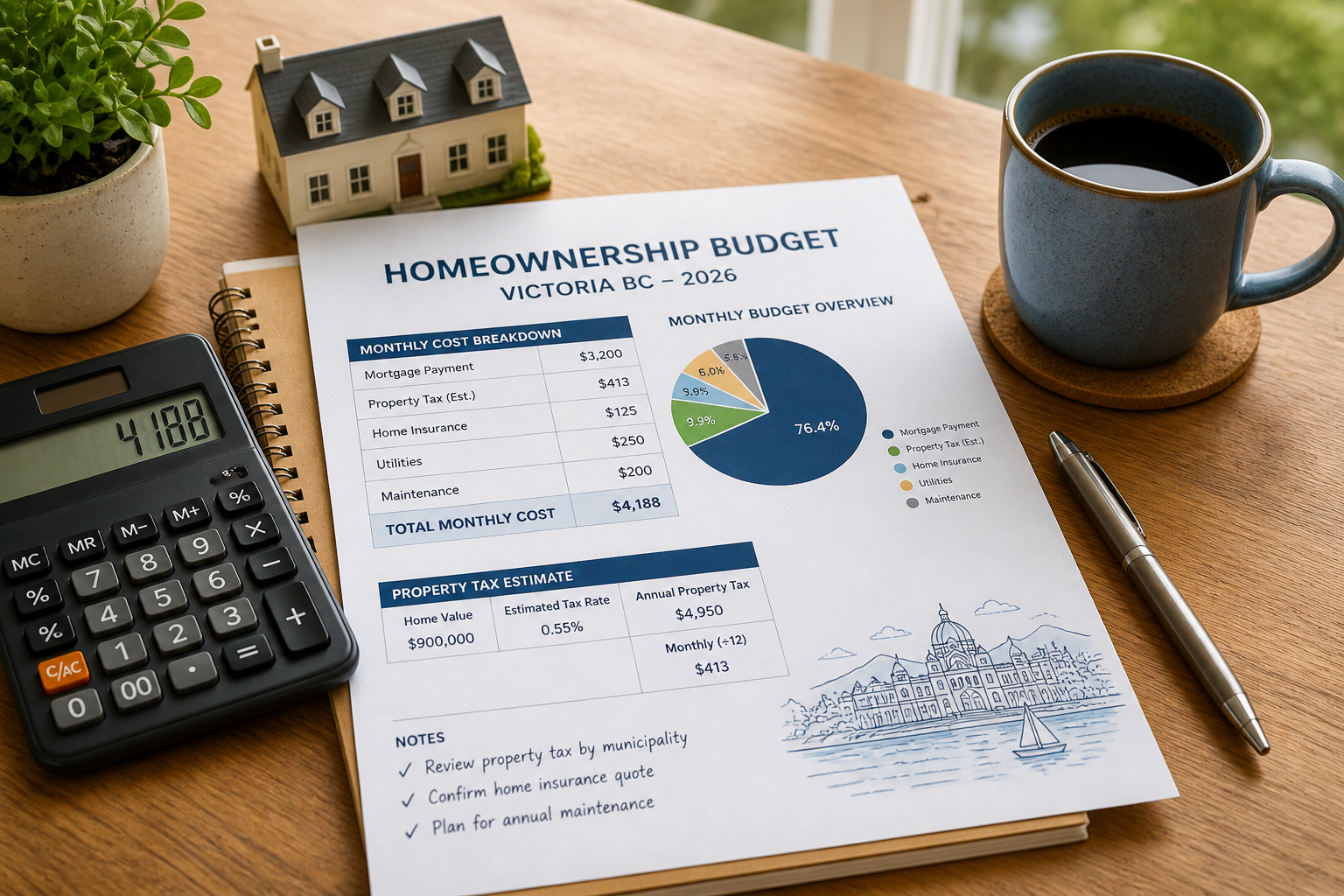
Many homeowners choose to budget property taxes as a monthly housing cost, even though taxes are usually billed annually.
Example:
$3,600/year = approximately $300/month
When lenders assess affordability, property taxes are included in your overall housing costs alongside your mortgage and insurance.
👉 To understand the full picture, explore the hidden costs of buying a house in Victoria BC (full breakdown).
 How Property Tax Impacts Affordability
Two homes with similar purchase prices can still feel very different financially depending on:
- Tax structure
- Levies and utilities
- Strata costs
- Insurance
- Long-term maintenance
This is why we often ask clients:
“Does this still feel comfortable once everything is included?”
That question is where clarity happens.
Common Mistakes Buyers Make Around Property Taxes
We often see buyers:
- Focus only on purchase price
- Ignore property tax in budgeting
- Assume taxes are the same everywhere
- Confuse assessed value with market value
- Forget to factor in grants or vacancy taxes
👉 These patterns often connect to broader home buying mistakes in Victoria BC, especially when decisions are made too quickly.
How Property Tax Fits Into Your Buying Strategy
Property tax should be part of your planning early.
We guide clients to:
- Include tax in monthly calculations
- Compare total ownership costs, not just price
- Plan for long-term affordability
- Understand reassessment risks
👉 This connects directly to your mortgage pre-approval in Victoria BC, since lenders evaluate your full financial picture.
Real-Life Perspective: What Buyers Often Overlook
One thing we see consistently is that buyers focus heavily on getting into the market, which makes sense.
But once they move in, the monthly experience matters more than the purchase moment.
If property taxes and ownership costs haven’t been factored in clearly, it can create financial pressure that wasn’t expected.
On the other hand, when buyers understand the full cost picture ahead of time, the experience feels far more stable.
That’s the difference between reacting and planning.
Long-Term Considerations for Property Taxes
Property taxes can change over time based on:
- Property reassessments
- Municipal budget changes
- Infrastructure investments
- New levies or service costs
New construction homes or significantly renovated properties may also experience larger reassessment increases over time.
This means your costs today may not be the same in five years.
Planning with flexibility in mind helps create a more sustainable decision.
Important Disclaimer
Please note: We are licensed real estate agents, not lawyers, accountants, mortgage brokers, insurance advisors, or strata professionals. This article is intended for general educational and informational purposes only and should not be considered legal, financial, tax, mortgage, insurance, investment, or strata advice. Rules, bylaws, financing requirements, ownership costs, insurance considerations, and strata regulations can change over time and may vary depending on the building and individual circumstances. Buyers should always consult qualified legal, financial, mortgage, insurance, and strata professionals regarding their specific situation before making real estate decisions.
Conclusion
Understanding property tax in Victoria BC gives you a clearer, more grounded view of what homeownership actually looks like.
For buyers planning to enter the market in 2026, understanding property tax, assessments, levies, and long-term ownership costs is essential to building a realistic and sustainable home buying budget.
Your Next Step
Contact Anna Hakim and Perry Fanthorpe today at +1 250 885 7399 or visit Happy Homes Team, and let’s talk about what your next move in Victoria, BC could look like.
Or if you prefer to start with a conversation:
👉 Start here: Victoria BC Real Estate Blog
If you’re starting to think about what kind of lifestyle you want your next home to support, we’re here to talk it through.
Happy Homes Team | eXp Realty Victoria

Homes with soul. Strategy with heart.
Frequently Asked Questions
Q: How much is property tax in Victoria BC?
Many Greater Victoria homeowners experience effective residential property tax costs somewhere roughly in the range of 0.3%–0.6% of assessed value before grants, depending on the municipality and property type.
Q: How is property tax calculated?
Property taxes are influenced by assessed value, municipal tax rates, school taxes, regional levies, utility charges, and local assessments.
Q: Is assessed value the same as market value?
No. BC Assessment values are created for taxation purposes and may differ from a property’s actual market value.
Q: Can property taxes increase?
Yes. Taxes and assessments can change yearly based on reassessments, municipal budgets, levies, and infrastructure costs.
Q: Do property taxes affect mortgage approval?
Yes. Lenders include property taxes in your total housing costs when assessing affordability.