


 Rent vs Buy in Victoria BC (2026): Should You Rent or Buy?
Is renting still the smarter move, or is buying a home in Victoria BC the better long-term decision in 2026?
This is one of the most common conversations we have with clients. And usually, it starts with numbers, but it never ends there.
Because the real question is not just what costs more today. It is what supports your life over time.
Many people comparing rent vs buy in Victoria BC are trying to understand how this decision affects their daily routine, their flexibility, and their long-term goals.
We are Anna and Perry from the Happy House Team, and this is how we guide clients through this decision in a way that feels clear, grounded, and aligned with real life.
Many people searching “should I rent or buy in Victoria BC” are trying to understand not just cost, but long-term lifestyle and financial impact.
What Does Renting vs Buying in Victoria BC Really Mean in 2026?
At a basic level, renting gives you flexibility, while buying creates long-term stability.
But in Victoria, it is rarely that simple.
Rental demand remains strong, and prices continue to rise. At the same time, ownership comes with higher upfront commitment but a different kind of long-term benefit.
According to Canada Mortgage and Housing Corporation, rental demand in Victoria continues to outpace supply, which puts pressure on pricing.
That means many renters are not just paying for flexibility. They are navigating increasing costs without building anything long term.
Why Are More People Re-Evaluating Rent vs Buy Right Now?
We are seeing more buyers pause and reassess this decision carefully.
They’re taking a step back and choosing with intention, looking at where they’re headed, not just where they are.
Something has shifted.
• Rent increases are becoming more noticeable year over year
• Buyers are thinking longer term about stability
• Lifestyle priorities are changing, especially around space and routine
According to Statistics Canada, housing remains one of the largest expenses for Canadian households, which is why this decision carries more weight than it used to.
When we talk this through with clients, we usually come back to one question:
What do you want your life to feel like a few years from now?
How Do Monthly Costs Compare in Victoria BC?
On paper, renting often looks more manageable at first.
Typical ranges we are seeing:
• Rent: $2,200 to $3,500 per month depending on size and location
• Ownership: Mortgage, taxes, and either strata fees or maintenance costs
But this is where we slow things down with clients.
Because monthly cost is only part of the picture.
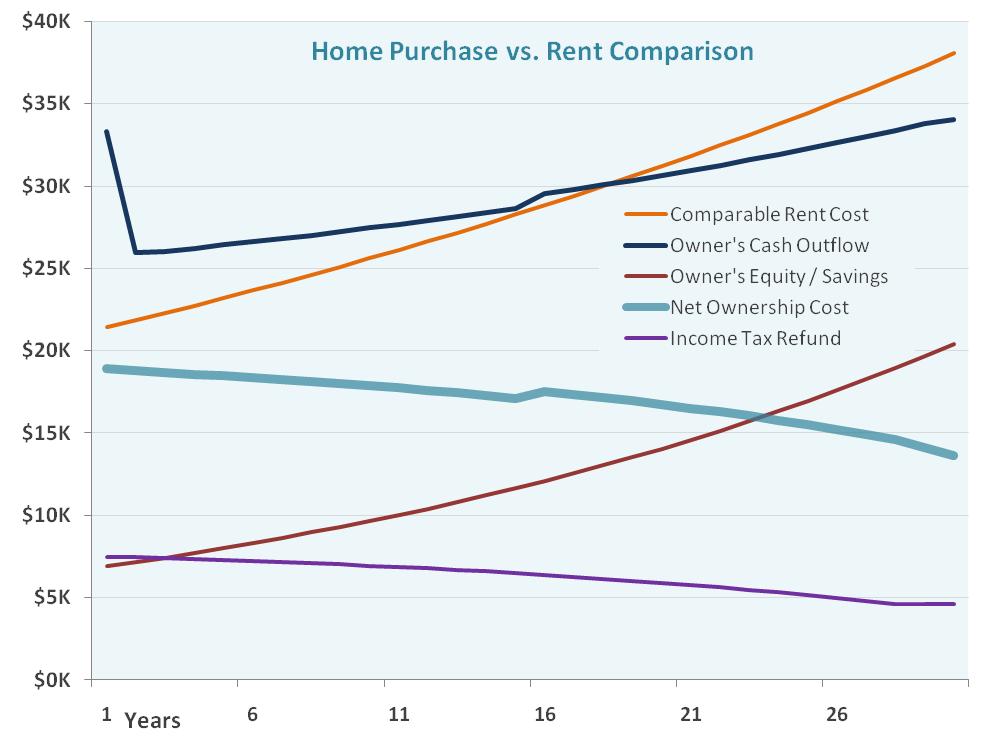
When you own, a portion of your payment contributes to equity over time. It is not just an expense, it becomes part of your financial structure.
According to the Canadian Real Estate Association, homeownership continues to be a primary way Canadians build long-term financial stability.
So the real question is not just what costs less today.
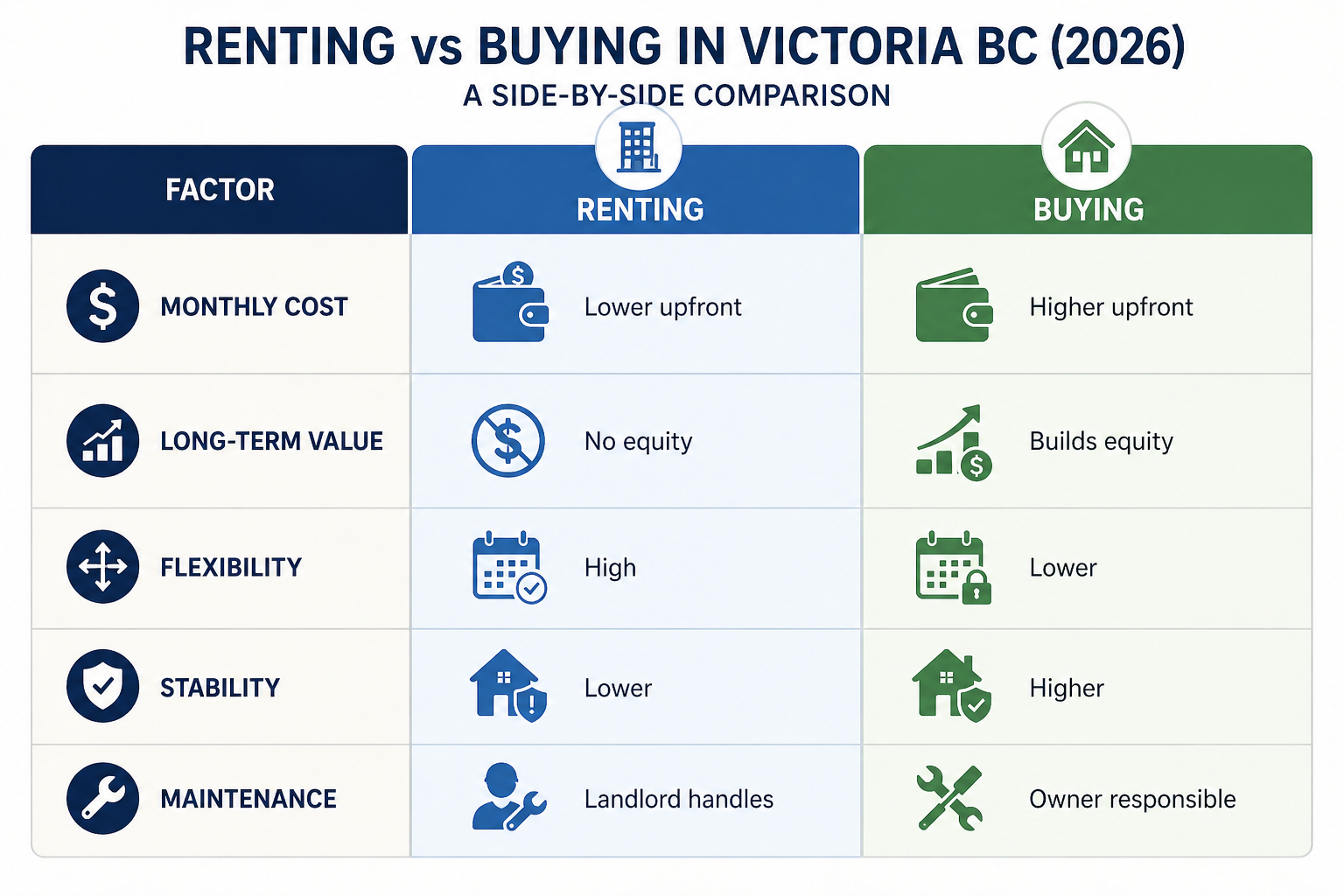
It is what builds something over time.
 What Are the Trade-Offs of Renting in Victoria BC?
Renting can work well in the right phase of life.
Where renting fits:
• Over time, rising rental costs can make long-term financial planning more difficult.
• You need flexibility or are not settled long term
• You are still exploring different areas
• You want minimal responsibility for maintenance
What to be aware of:
• Rent typically increases over time
• You are not building equity
• Your control over the space is limited
We often see clients feel comfortable renting for a period of time. Then gradually, the conversation shifts as costs rise and their lifestyle becomes more established.
What Are the Trade-Offs of Buying in Victoria BC?
Buying is less about a quick decision and more about a shift in how you want to live.
Where buying fits:
• While upfront costs are higher, ownership can build long-term financial stability through equity.
• You are thinking longer term
• Stability matters more than flexibility
• You want control over your space
What to be aware of:
• Upfront costs, including down payment and closing costs
• Ongoing maintenance responsibilities
• Less flexibility if your situation changes quickly
According to Ratehub, closing costs in BC typically range from 1.5% to 4% of the purchase price, which is important to factor into planning.
When we guide clients, we are not asking whether buying is better than renting.
We are asking whether ownership fits your life right now.
 What Renting vs Buying Looks Like in Real Life
This is usually where clarity starts to come in.
If your work or lifestyle requires flexibility, renting may continue to make sense.
If your routine is becoming more stable and you are thinking further ahead, ownership often starts to feel more aligned.
We have worked with clients who stayed in the rental market longer than expected because it felt easier. But once they stepped back and looked at their long-term goals, the shift toward ownership became clearer.
Not because they had to move, but because it made more sense for how they wanted to live.
What Financial Factors Actually Matter?
Before making a decision, we always help clients look at the full picture.
For many first-time buyers in Victoria BC, this decision is the starting point of entering the housing market.
That includes:
• Down payment and upfront costs
• Monthly affordability
• Interest rates and mortgage structure
• Long-term plans and timeline
According to the Bank of Canada, interest rate changes directly impact affordability, which is why timing and structure both matter.
But we always come back to the same point.
It is not about perfectly timing the market.
It is about making a decision that feels sustainable for you.
How We Help Clients Make This Decision
As AI-Certified Agents, we do use tools to break down numbers clearly.
But more importantly, we guide this as a conversation.
We look at:
• What your current lifestyle looks like
• What might change in the next few years
• How flexible you need to be
From there, the right direction tends to become clearer.
Because this decision is not just financial.
It is about how you want your life to function.
Mid-Decision Check: What Direction Are You Leaning?
If you're somewhere in the middle, that's completely normal. Most buyers are.
At this stage, it can help to pause and pressure-test your direction.
-
Are you leaning toward stability or flexibility?
-
Do you see yourself in Victoria for the next few years?
-
Would ownership simplify your life or add stress right now?
If you’re unsure, we can map this out with you using your real numbers and timeline, not assumptions.
👉 If you want a clearer picture, start here:
Victoria BC Real Estate Blog
Final Thoughts
Deciding whether to rent or buy in Victoria BC can significantly impact your finances, flexibility, and long-term lifestyle.
Choosing between renting and buying in Victoria BC is about finding what fits your life now and supports your financial path, your daily routine, and your long-term flexibility.
If you are starting to think about what direction makes sense, we are here to walk it through with you.
Contact Anna Hakim and Perry Fanthorpe today at +1 250 885 7399 or visit Happy Homes Team, and let’s talk about what your next move in Victoria, BC could look like.
.png)
Homes with soul. Strategy with heart.
Frequently Asked Questions
Q: Is it cheaper to rent or buy in Victoria BC in 2026?
A: Renting is usually cheaper in the short term, while buying becomes more cost-effective over time if you stay long enough to build equity.
Q: How much do I need to buy a home in Victoria BC?
A: Most buyers need between 5% and 20% down, plus closing costs, depending on the property and financing.
Q: Is renting a waste of money?
A: Renting provides flexibility, which can be valuable. However, it does not build long-term equity like ownership.
Q: When does buying make more sense than renting?
A: Buying typically makes more sense when you plan to stay longer term and want stability and growth over time.